Our Major Research Directions Include:
Pan-Cancer Agents for Drug Delivery
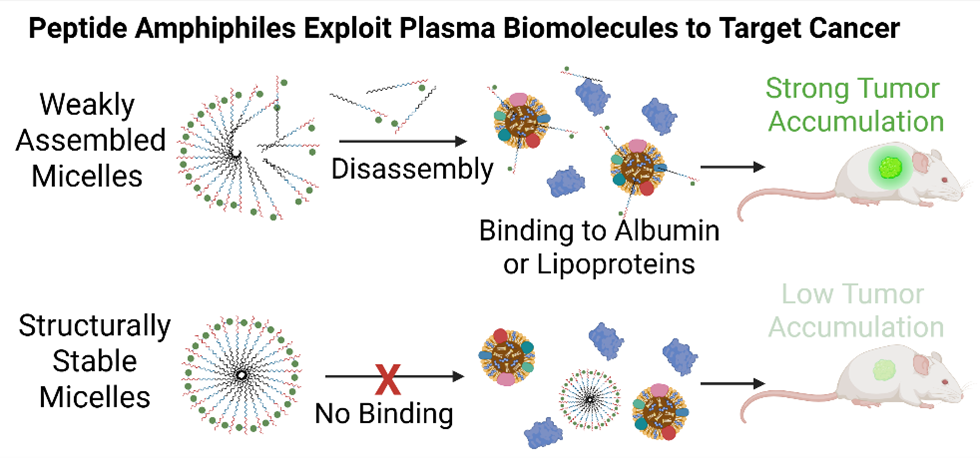
We explore novel delivery systems that exploit the increased metabolic activity of cancer cells to accumulate in a broad range of solid tumors. We conjugate various therapeutic molecules, such as chemotherapy drugs and immunotherapy agents, to these pan-cancer-targeting nanomaterials and use them to improve the therapy of solid tumors with reduced side effects. Currently, we are evaluating these novel materials in preclinical studies for the treatment of various cancers, including colon, breast, and brain cancers.
Selected Publications
L. Xiang, M.R. Stewart, K. Mooney et al., Advanced Materials, 2026, 38, e09359
K. Bonic et al., Small, 2026, 22, e12073
Selected Publications
L. Xiang, M.R. Stewart, K. Mooney et al., Advanced Materials, 2026, 38, e09359
L. Xiang et al., Advanced Functional Materials, 2026, (In Press).
Research Support
We would like to thank the following agencies and centers for their continued support of our research





Treating Cancer with Ultrasound-Responsive Nanomaterials
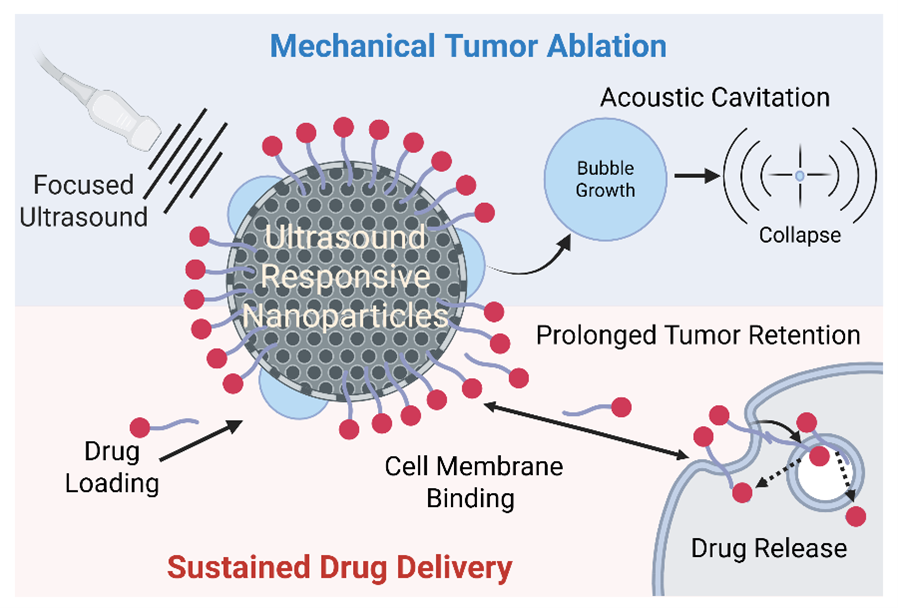
Our lab engineers nanoparticle surfaces to develop multifunctional platforms for low-intensity ultrasound therapy and adjuvant drug delivery. We are currently exploring these nanoparticles for mechanical ablation of solid tumors and for localized chemo-/immunotherapy. We also explore strategies to combine innate immune responses generated by mechanical tumor ablation with sustained adjuvant delivery enabled by our nanoparticles to develop effective anti-cancer immune responses against melanoma and other cancers.
Multimodal Imaging of Cancer
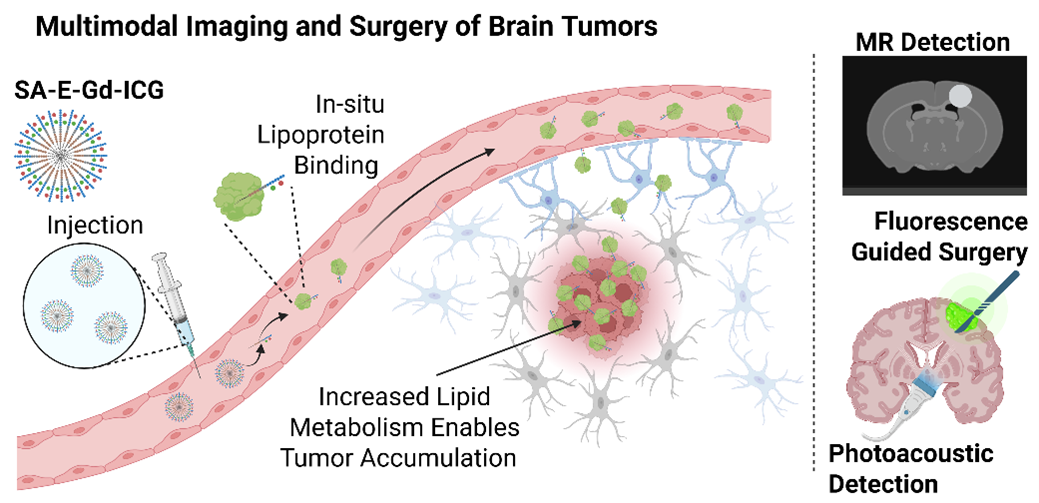
We also apply our pan-cancer targeting platforms for the detection of solid tumors. Through collaborations with clinicians at OHSU and other institutes in the US, we develop multimodal contrast agents for fluorescence, photoacoustic, and MRI detection of brain tumors. Our goal is to utilize these multimodal contrast agents to improve the localization and resection of pediatric and adult brain tumors to improve survival rates and reduce surgery-related morbidities.
Selected Publications
L. Xiang, M. I. Henderson et al., Nano Letters, 2025, 25, 7875.
S. Sabuncu et al., Advanced Materials Interfaces, 2023, 10, 2201543.